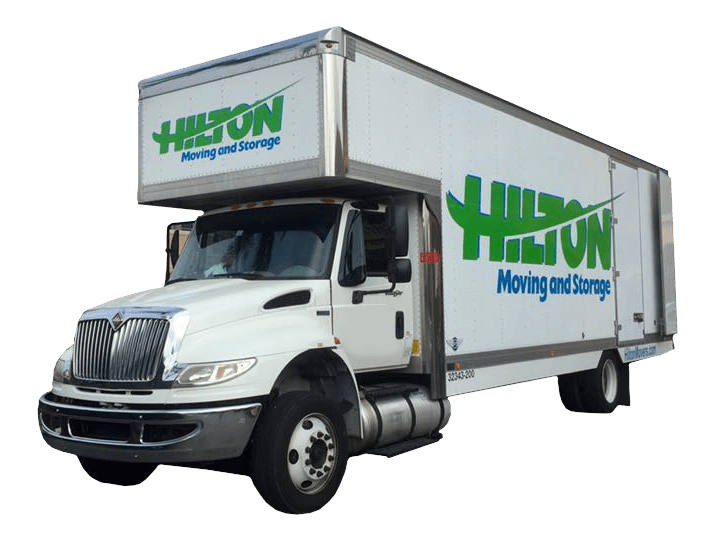
You found the piece you wanted. Maybe it was a sofa at a furniture store in Naples, a dining table at a showroom, or a dresser from someone selling it privately. The piece is yours. What is less clear is how it gets from where it is sitting now to the room where you want it.
Some sellers deliver, some do not, and the ones that do often mean something very different by the word delivery than you had in mind. This is what furniture pickup and delivery is for: one crew collects the piece, brings it to your home, carries it in, and sets it where you want it. Below is how that works and what to sort out before the day.
When you need one piece collected, not a whole house moved
A pickup and delivery job is a short, specific errand rather than a move. The piece already belongs to you. It just needs to travel from point A to point B with people and equipment that will not scratch it or wreck your doorframe on the way in.
The situations that bring people to it look like this:
- You bought something from a local furniture store or showroom that offers curbside drop-off only, or no delivery at all.
- You bought a piece from a private seller and the only option was to come and get it.
- You found something at an antique shop or a smaller independent store with no truck of its own.
- A family member is passing along a piece and it needs to come across town.
- The piece is heavy, awkward, tall, or made of something you would rather not have slide around in a borrowed pickup.
If you have several pieces coming from several places, or shipments arriving from out of state, that is a slightly different service. Our article on furniture receiving and white-glove delivery covers the version where purchases ship to our warehouse first and then go out to you in one trip. And if you are moving a handful of things you already own from room to room or house to house, that is a small moving job.
What furniture pickup and delivery involves
It is a straightforward sequence, and knowing it ahead of time makes the planning conversation short.
First you tell us what the piece is, where it is, and where it is going. Dimensions help, and so does a photo. From there we can tell you what the job needs.
On the day, the crew goes to the pickup location. They look the piece over before it goes on the truck and note its condition, which is routine practice in this industry and gives both of you a clear record of how the piece looked when it left. Then it gets wrapped. Blankets and pads go around the body of the piece, corners and edges get extra attention, glass and stone get separate handling, and drawers and doors are secured so nothing swings open in transit.
The piece is loaded, strapped, and driven to your home. At your end the crew protects the route in, carries the piece through, and sets it in the room and the spot you have chosen. Packing material comes off and leaves with the truck rather than with you.
Protecting the route in matters more than people expect, especially when one heavy piece is making a tight turn. We wrote about protecting floors, walls and doorways in more detail.
Getting the pickup end sorted before the day
Most of what can go sideways on a pickup happens at the seller end, not at your house. A few minutes of checking saves a wasted trip.
- Confirm who will be there to hand the piece over, and that they know a crew is coming rather than you personally.
- Ask whether the piece is already out and accessible, or still on a sales floor, upstairs, or behind other inventory.
- Find out where a truck can park. A store may have a loading area with set hours; a private home may have a narrow drive or a gate.
- Check whether anything needs to be signed or paid for at the point of collection, and sort that out with the seller first.
- Ask whether the piece is coming boxed or assembled. Both are fine, but they are different jobs.
Tell us anything that sounds like a complication: a third-floor walkup, a gate code, a tight alley, a two-hour pickup window set by the store. None of it is a problem when we know in advance; all of it is a problem when it turns up on the day.
Will it fit? Measuring the path at both ends
The piece fitting through the door is not the same question as the piece fitting through the door while two people are carrying it around a corner. Measure before the piece is on a truck, not after.
What to measure:
- The piece itself: width, depth, height, and the diagonal across its largest face.
- Every doorway on the route, including the one at the pickup end.
- Hallway width, and anywhere the route turns a corner.
- Stairwell width and headroom, and the turn at a landing if there is one.
- Elevator interior, door opening, and the ceiling height inside the car.
Our guide to measuring furniture, doorways and stairs walks through this with the specific numbers to write down. If a measurement is borderline, say so when you call rather than hoping. There is usually a workaround, but it needs to be planned.
If you live in a condo or a building with a management office, check its rules on delivery hours and on reserving the service elevator. A reserved elevator window is easier to arrange a week out than the morning of.
Pieces that have to come apart, and pieces that need extra protection
Some furniture does not travel in one piece. A sectional separates. A dining table loses its legs. A bed frame comes apart. A tall armoire may need its doors off to clear a turn. Taking a piece down and rebuilding it correctly at the other end is normal work on a delivery like this, and it is better planned than discovered.
Our article on taking furniture apart and putting it back together covers how that is handled, including keeping hardware with its own piece so reassembly is not a guessing game.
Separately, some pieces are fragile in ways that are not obvious from looking at them. Older wood moves with humidity and veneer lifts. Marble and glass tops travel upright and separate from the base. Cane and woven panels dent, and lacquered finishes mark under a strap.
If the piece you bought is old, inherited, or simply unusual, mention it when you describe the job. How professional movers protect antique furniture explains the approach for those pieces in more depth.
When the new piece needs somewhere to wait
Sometimes the piece is ready before the room is. The floors are not refinished, the paint is wet, the house is being renovated, or you bought the piece in March and you are not back in Naples until November.
We can hold a piece in our warehouse until you are ready for it. It is worth being clear about what that means, because the phrase furniture storage makes most people picture something it is not. We have one 30,000 square foot climate-controlled warehouse on Shearwater Street. Our staff manages it. There are no units, no keys, no gate codes, no access hours, and you do not drive over to the warehouse. It is not a self-storage building with your name on a roll-up door. Our crew brings the piece in, it is logged and kept in stable conditions, and our crew brings it out and delivers it when you say the room is ready.
The climate-controlled part is not a formality in Southwest Florida. Heat and humidity are hard on wood joints, veneer, leather and upholstery, and a new piece sitting in an uncooled space for a few months does not come out the way it went in. Our piece on storing furniture during a home renovation goes further into how a hold like this works around a project.
Common questions about furniture pickup and delivery
Will you pick up a single item?
Yes. One chair, one headboard, one sideboard. A single piece is a real job with a real route to plan, and we treat it that way.
Can you collect from more than one place in the same trip?
Often, yes, if the stops are reasonably close together and the pieces fit on one truck. Tell us all the pickup addresses up front so the route and the loading order can be worked out properly.
What if the seller only has a loading dock and no help?
That is fine. Our crew brings its own equipment and does the lifting. We need to know the dock hours and any height or vehicle restriction.
What if the piece does not fit once you get here?
This is exactly why the measurements come first. If a route turns out to be too tight on the day, the options are usually taking the piece further apart, trying a different entrance, or holding the piece in our warehouse while you decide. We will tell you what we are seeing rather than forcing it through.
Which areas do you cover?
Naples, Marco Island, Bonita Springs, Estero, Golden Gate, Pelican Bay, Pine Ridge, Vineyards and Lely Resort.
One piece, picked up and placed
A single piece of furniture does not need a full moving crew and a whole day. It does need someone who measures first, wraps properly, protects your floors, and puts the piece exactly where you want it rather than inside the front door.
If you have bought something and you are looking at it wondering how it gets home, call us at (239) 231-7050 or request an estimate through the site. Tell us what the piece is, where it is now, and where it needs to end up, and we will tell you what the job takes.