Downsizing a parent’s home is a different kind of move. The house is usually full, the next place is smaller, and the person whose belongings these are may not be the person making the arrangements. That combination is what makes the whole thing feel heavy. It is also what makes it manageable, once you take it in the right order.
This is about the order. Where to start, how to pace the sorting so it does not land on moving week, what to do with the pieces nobody has decided about yet, and where we fit in the middle of it.
Start from the new floor plan, not the old house
The instinct is to walk the current house room by room and decide what stays and what goes. That is backwards, and it is why downsizing projects stall in the first week. Standing in a full living room with no idea what the next living room looks like, every decision feels like a guess.
Get the new floor plan first. Room dimensions, wall lengths, closet depth, whether there is a garage or a storage closet, where the windows and doors sit. If the new place is a condo or a villa, the leasing office or the builder can usually supply a plan with measurements on it. If not, go and measure it yourself with a tape and write the numbers down.
Once those numbers exist, the question changes. It stops being “should we keep this” and becomes “where does this go.” The second question has an answer. A sofa either fits along that wall or it does not. A dining table either leaves room to walk around it or it does not. Decisions that felt impossible in the abstract become ordinary once there is a plan to hold them against. Our guide to measuring furniture, doorways and stairs covers how to take those measurements so they are useful later.
Give the sorting its own weeks
Sorting and packing are two different jobs, and treating them as one is a reliable way for a downsizing move to go sideways. Packing a house is a matter of days. Deciding what to do with decades of belongings is not, and it does not speed up because a truck is booked.
Plan the sorting as its own stretch of calendar, well ahead of the move date. Short sessions work better than long ones. An hour or two in a single closet, then stop. A routine approach in the moving trade is to begin in a low-stakes area — a linen closet, a spare bedroom, the laundry room — rather than the places loaded with meaning. Nobody should start with the photographs.
Pace matters more than progress in the first week. Once a rhythm is established, the harder rooms go faster than anyone expects. Reverse the order and the project stops in the hallway with a box of letters.
Sort into three groups, not two
Keep or discard is too blunt for a downsizing move, because there is always a third group: the pieces nobody is ready to decide about yet. A grandmother’s dresser. A dining set that no longer fits but nobody wants to part with. Boxes a son or daughter says they will take once they have the room.
Put that third group somewhere instead of putting it off. Give it a label and treat it as its own category — not decided yet — and keep it moving with everything else. The mistake is letting undecided items hold up the move date, because they will hold it up indefinitely. A decision that is hard in October is still hard in November.
So the three groups are: going to the new place, going to a family member, and not decided yet. Everything else the family handles on its own terms. Writing those three words on sticky notes and walking the house with a pad is a cheaper planning tool than it sounds, and it gives the person doing the deciding something concrete to point at.
What a smaller place can really hold
Square footage is the number everyone starts with, but wall space is usually what decides the outcome. A smaller home has fewer long uninterrupted walls, and long walls are what sofas, headboards, bookcases and china cabinets need. Ceiling height matters too, especially for tall armoires and anything that has to tilt to get through a door.
The pieces that tend not to survive a downsizing move are the large dining set, the second seating group, the deep sectional and the oversized bedroom suite. The pieces that tend to come through fine are the ones with a specific job in the new plan. If a piece does not have a wall waiting for it, that is useful information early rather than on moving day.
Access is the other half of it. Doorway widths, turns at the top of a staircase, elevator depth in a condo building. A piece can fit perfectly in the new room and still not reach it. There is also a short list of things that cannot travel on a moving truck at all, which is worth reading before anything gets packed — see what movers cannot take.
Where storage fits, and what ours actually is
The phrase furniture storage makes most people picture something it is not. So here is the plain version.
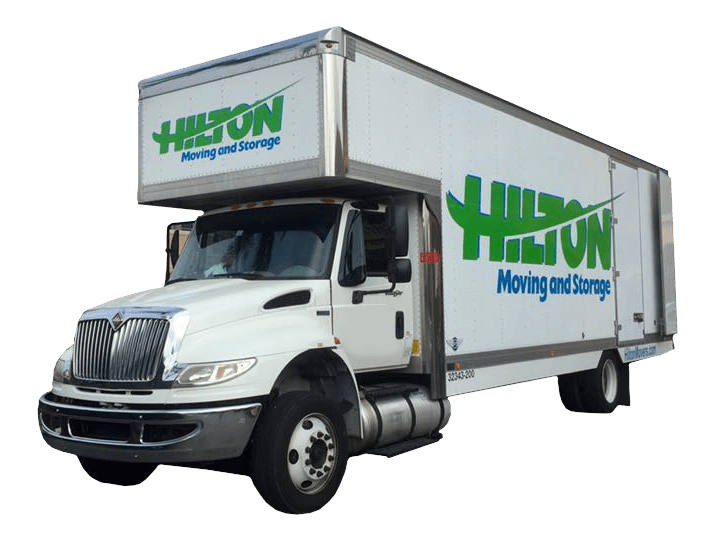
Hilton Moving and Storage keeps one 30,000 square foot climate-controlled warehouse at 3500 Shearwater Street in Naples, and it is staff-managed. There are no units, no keys, no gate codes and no access hours, and you do not drive over to the warehouse. It is not a self-storage building with your name on a roll-up door, and we do not use portable containers or pods. Our crew collects the items, logs them in, keeps them in the warehouse, and brings them out when you tell us you are ready.
In a downsizing move that model earns its keep in three ways. It holds the not-decided-yet group so a hard decision does not stall an easy move. It holds pieces promised to a family member who cannot take them this month. And it bridges the stretch when the old house closes before the new place is ready, which we go into in more detail in moving between closing dates. The same approach works when a home is being renovated before anyone moves in, covered in storing furniture during a renovation.
When you are arranging the move but not making the decisions
If you are the one arranging the move and the house is not yours, there is a second set of opinions in the room — and they belong to the person whose things these are. That gap is worth planning for rather than discovering on moving day.
A few things help. Let the parent make the calls about their own belongings, even the ones that look obvious from the outside — the move goes faster when nobody is defending a decision they did not make. Photograph the rooms before anything is packed, especially bookshelves, dressers and anything arranged a particular way, so the new place can be set up to feel familiar rather than rearranged. Keep a small box of daily things — glasses, medication, chargers, a few framed photographs, the remote — that travels with the person rather than on the truck.
Settle two practical questions ahead of time as well: who is on site on moving day, and who answers a question when our crew needs one. One name for each is enough, and having it agreed in advance keeps the day quiet.
What we handle, and what stays with the family
Being clear about this up front saves everyone a conversation later. We pack, we move, we store in the warehouse described above, and we deliver and place furniture at the other end. We can collect a single piece from a store, a showroom or a private seller and bring it to the new place, which is covered in furniture pickup and delivery in Naples.
What we do not do is decide for you. We are not a cleanout service and we do not sort, appraise or find new homes for the things that are not coming. That part stays with the family, and it should — the sorting is personal, and it belongs to the people whose history it is.
We work across Naples, Marco Island, Bonita Springs, Estero, Golden Gate, Pelican Bay, Pine Ridge, Vineyards and Lely Resort, and on Sanibel, Captiva and Gasparilla.
Common questions
How far ahead should we start?
Start the sorting weeks before the move date rather than days. The packing and the truck are the short part. Tell us the date as soon as one exists, even a rough one, and we can work backwards from it with you.
Can you hold furniture if the new place is not ready?
Yes. Items go into the warehouse and come out when you tell us. That is the ordinary way a downsizing move works when the two dates do not line up.
What if pieces are going to two different addresses?
That is a normal arrangement — some furniture to the new home, some to a family member elsewhere. Tell us which is which while we are planning and we will sort the loading around it.
What if the building only allows deliveries at certain times?
Some condo buildings and gated communities set delivery windows or require the elevator to be reserved. Find out the rules early and pass them to us, and we will schedule around them.
Which areas do you cover?
Naples, Marco Island, Bonita Springs, Estero, Golden Gate, Pelican Bay, Pine Ridge, Vineyards and Lely Resort, plus Sanibel, Captiva and Gasparilla.
If you are working through a parent’s move and want to talk it through before anything is decided, tell us where things stand and we will walk you through how we would handle it. Call us at (239) 231-7050.