Most people getting ready for a move think about their furniture. They worry about the sofa, the dining table, the television. What catches them off guard is the damage that happens to the house itself — a gouge in the wood floor, a scrape down a doorway, a dent in the drywall at the bottom of the stairs.
It happens more than you would think, and it usually happens in the same handful of places. The good news is that almost all of it is preventable. Protecting the home is a normal part of a full-service move, and it takes place before a single box goes out the door.
Here is what that protection actually looks like, where damage tends to happen in Southwest Florida homes, and what you can do ahead of time to make the day go smoothly.
Why the house needs protecting, not just the furniture
Moving day involves heavy items traveling through narrow spaces, over and over, often by people walking backwards. A dresser that clears a doorway by an inch is fine until someone turns it slightly. A refrigerator on a dolly is fine on tile and unforgiving on a wood threshold.
Homes around Naples add a few wrinkles of their own. Polished marble and porcelain tile scratch more easily than people expect. Lanai doors and sliders are often the widest opening in the house, so they end up being the main route, and their tracks and frames take a beating. Many homes here have long tile entries that pick up grit from outside, and grit under a dolly wheel is what leaves the scratch.
The other reason it matters: if you are selling or closing on a home, the condition it is left in is not a small thing. A scraped wall on the way out can turn into a phone call between attorneys.
What gets protected before anything moves
On a full-service move, the setup happens first. It is not glamorous and it adds time to the front of the day, but it is what keeps the rest of the day uneventful.
Floors
Floors get the most traffic and take the most abuse. Protection usually runs along the main path — the route from the farthest room to the front door, and out to the truck. Hard floors, carpet and stairs each need a different covering, which is why you will see more than one kind of material going down in the same house.
The entry deserves extra attention. That is where outside dirt comes in, where the door is propped open all day, and where the heaviest pieces pause while someone gets a better grip.
Doorways and door jambs
Door jambs are the single most common casualty of a move. They stick out into the opening, they are usually painted wood, and every large item has to pass them. Padding on the jambs of the doors that will see traffic takes a couple of minutes and prevents most of the scrapes people notice weeks later.
Doors themselves often come off their hinges for the day when an opening is tight. That sounds dramatic the first time you hear it, but removing a door buys two or three inches, and two or three inches is frequently the difference between an easy carry and a scraped wall.
Stairs, railings and corners
Stairs combine weight, awkward angles and limited footing. Railings and banisters get padded because they are at exactly the height where a box corner hits them, and wall corners along a stairwell get the same treatment.
Elevators and shared hallways
In a condo or a building with common areas, protection extends past your front door. Buildings usually want pads hung in the elevator and coverings on the hallway floor, and many of them have written rules about it. That is worth sorting out before the day rather than during it.
The walk-through that prevents most problems
Before the work starts, it is worth walking the house together and agreeing on the route. That conversation covers a few things:
- Which door the bulk of the load will go out of
- Which pieces are going to be tight and may need a door removed or the item taken apart
- Anything already damaged, so nobody wonders later whether it happened that day
- Low light fixtures, ceiling fans and hanging pendants along the path
- Where the truck can park, and how far the carry is from the door
That last one matters more in gated communities and in neighborhoods with narrow lanes or low tree branches. If the truck cannot get close, the route is longer and the protection has to stretch further. Knowing that in advance means it is planned for instead of improvised.
The places damage usually happens
After enough moves, the trouble spots are predictable:
- The turn at the bottom of a staircase. Anything long has to pivot there, and the wall takes the hit.
- The front door threshold. Heavy items get set down, dragged slightly, then picked back up.
- Interior door jambs on bedrooms. Bedroom doors are usually the narrowest in the house, and dressers and mattresses both have to come through them.
- Slider tracks. Dolly wheels do not belong on them, so items going out to a lanai usually get carried the last few feet.
- Garage steps. Often a tight turn, a step down, and poor lighting all at once.
None of these are exotic. They are just the spots where geometry works against you, and they are the reason padding goes on before the first item moves rather than after somebody has a close call.
What you can do the day before
A little preparation on your end makes the protection work better:
- Clear the path. Rugs, floor lamps, plant stands and shoe racks along the main route should be moved out of the way. Loose rugs on tile are a slipping hazard when someone is carrying weight.
- Take down what hangs low. Pendant lights over an island, wall art in a hallway, and anything on a stair wall.
- Sweep the entry. Sand and grit are what turn a dolly wheel into sandpaper.
- Sort out parking. If you are in a gated community, arrange the gate access ahead of time. If neighbors park on the street, a friendly heads-up the night before helps.
- Set aside the things that are not going. A closed closet or a labeled corner beats a conversation about it in the middle of the day.
- Plan for pets and kids. Doors stand open for hours on moving day. A closed room, or a day somewhere else, is safer for everyone.
What to tell us when you book
The more we know before the truck arrives, the less gets figured out on the fly. Useful things to mention:
- Flooring that needs particular care — new wood, polished marble, or anything recently refinished
- A staircase, especially a narrow or turning one
- Oversized pieces: a sleeper sofa, an armoire, a safe, a treadmill, a piano, a large mirror or a glass tabletop
- Community or building rules, elevator reservations, or a required window for the move
- A long walk from the parking area to the door
- Whether you are leaving a home you have sold, so the walls and floors need to look the way you found them
None of it changes what we do — it changes how the day is planned, which is what keeps it on schedule.
The last walk-through
When the house is empty, walk it one more time before the truck leaves. Look along the baseboards, at the jambs of the doors that saw traffic, and at the entry floor. Open closets and cabinets. Check the garage and the lanai, because those are the two places items get left behind.
If something needs attention, the time to say so is while everyone is still standing there. It is a two-minute conversation on the day and a much longer one a week later.
Common questions
Does protecting the house add time to the move?
It adds time at the start and usually saves time overall, because the crew can move quickly once the path is set up and nobody is inching around a bare doorway.
Do doors really need to come off?
Not usually, but sometimes. When an item is within an inch or two of the opening, taking the door off is faster and safer than trying to angle around it.
What about an empty house with new floors?
Tell us before the day. New or freshly refinished floors are worth extra covering, and it is easier to plan for than to add halfway through.
Is this different for a small move?
The scale changes, not the approach. Even a one-room move has a doorway and an entry, and those are where the damage happens.
Planning a move in Naples or nearby
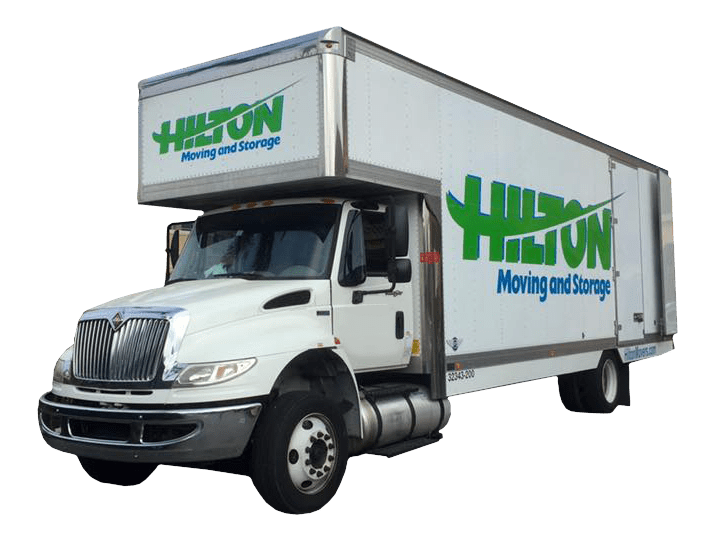
Hilton Moving and Storage has been moving families and businesses around Naples, Marco Island, Bonita Springs and Estero since 2010. Protecting the home is part of the job, not an add-on, and it is one of the first things that happens after the truck pulls up.
If you have a move coming up and you are wondering how it will go in your particular house — the tight hallway, the marble entry, the staircase — tell us about it and we will plan around it. Call (239) 231-7050 or request a free estimate, and we will walk through the details with you.