Ask anyone who has moved recently which room took the longest to pack, and most of them will say the kitchen. It is the room with the most items, the most fragile items, and the most things you are still using right up until the last day.
It is also the room where packing mistakes show up fastest. A badly packed box of plates does not survive the drive. A box of food left in a hot truck becomes a problem nobody wants to open.
Here is a practical way to work through a kitchen, from the cabinets you can pack weeks early to the coffee maker that goes in the last box.
Start by taking things out of the kitchen
Before any wrapping happens, pull out what is not making the trip. Kitchens collect things: the pan with the broken handle, the spice jar from three years ago, the second slow cooker.
Work through the cabinets and set aside anything you would not want to unpack and put away in the new place. That is the real test — not whether you might use it someday, but whether you want to carry it, unwrap it and find a cabinet for it.
Check expiration dates on anything in the pantry while you are in there. Open bottles, opened bags and anything refrigerated or frozen generally should not travel, and neither should aerosols or anything flammable.
Get the right supplies before you start
The kitchen is the one room where using the right boxes genuinely matters.
- Dish barrels. These are the tall, thick-walled boxes made for dishes and glassware. They are sturdier than a standard box, and worth using for anything breakable.
- Small boxes for heavy items. Canned goods, cast iron and small appliances go in small boxes. A large box full of cans is a box nobody can lift safely.
- Clean packing paper. Plain newsprint, not printed newspaper, which transfers ink onto dishes and leaves you washing everything twice.
- Bubble wrap for stemware and anything with a thin edge.
- Tape and a marker. More tape than you think. Kitchen boxes need their bottoms reinforced.
If you would rather not source any of it, professional packing is available, and the kitchen is the room people most often hand off even when they pack the rest of the house themselves.
Plates, bowls and serving pieces
Plates travel on edge, not stacked flat. Stacked flat, the weight of the pile lands on the plate at the bottom and the first bump in the road does the rest. On edge, they support each other the way they do in a dishwasher rack.
The routine for a stack of plates:
- Crumple paper along the bottom of the box until you have a cushioned layer two or three inches deep.
- Wrap each plate individually, then wrap groups of three or four together into a bundle.
- Stand the bundles on edge, side by side, filling the box across.
- Fill every gap with crumpled paper until nothing shifts when you tilt the box.
- Add a final layer of paper on top before closing it.
Serving platters and large shallow bowls go the same way — on edge, wrapped, cushioned. Heavy serving pieces go in the bottom of the box, lighter ones above them.
Glasses and stemware
Glassware is where most breakage happens, and almost always for the same reason: the inside of the glass was left empty.
Stuff a piece of crumpled paper inside each glass first. Then wrap the outside, working from one corner of a sheet and rolling the glass up in it. Stemware needs the stem wrapped separately before the bowl gets wrapped, because the stem is the weak point.
Glasses stand upright in the box, never on their sides, with paper packed between them and a good cushion above and below. Cell dividers — the cardboard grids that slot into a dish barrel — make this much easier if you have a lot of glassware.
Pots, pans and the rest of the cabinets
Pots and pans are forgiving. They can nest inside each other with a sheet of paper between them, lids wrapped separately and laid flat. Cast iron goes in a small box on its own, because it is heavy enough to punch through the bottom of a box that also contains something light.
Knives get wrapped with the blade covered and clearly marked, so nobody reaches into a box and finds one by accident. A knife block can travel with the knives in it if it is wrapped and taped closed.
Plastic storage containers are the one thing you can be casual about. Nest them, put the lids in a bag, and fill the empty space around a fragile item elsewhere in the box.
Small appliances
Small appliances do best in their original boxes if you kept them, and in small sturdy boxes if you did not.
Remove anything loose or breakable first — a blender jar, a glass carafe, a food processor blade — and wrap those separately. Secure cords with a tie or a piece of tape so they are not flopping around inside the box. Blades and beaters go in a labeled bag taped to the appliance, which saves a hunt later.
Anything with water in it should be emptied and left to dry for a day. A coffee maker or a kettle packed with water still in the reservoir will be damp inside for the whole trip.
The pantry
Sealed, shelf-stable food travels fine. Boxed goods, cans and unopened jars can go in small boxes, with the jars wrapped so they do not knock together.
What does not travel well: anything open, anything refrigerated or frozen, and anything in a glass bottle you would be unhappy to clean up. Cooking oil and vinegar leak in ways that ruin whatever is next to them, so if they are coming, bag them separately.
For a long-distance move, it is usually easier to eat down the pantry in the weeks before and restock at the other end than to move a cabinet full of food across the country.
Labeling that saves you a day
Kitchen boxes all look alike, and a kitchen unpacks in a specific order. Label the side of the box, not just the top, so you can read it in a stack, and write what is inside rather than just the room:
- KITCHEN – EVERYDAY PLATES & GLASSES – FRAGILE
- KITCHEN – POTS & PANS
- KITCHEN – PANTRY, SEALED
- KITCHEN – OPEN FIRST
That last one earns its keep. Pack one box with the coffee maker, a few mugs, plates and utensils for everyone, a pan, dish soap, a towel and a roll of paper towels, and mark it clearly. It means the first evening in the new house involves coffee and a meal instead of opening nine boxes to find a spoon.
A sensible order to work in
Kitchens get packed in layers, because you are still cooking in there:
- Three to four weeks out: the things you rarely touch — holiday dishes, serving pieces, the back of the pantry, cookbooks, the appliances that live in a cabinet.
- One to two weeks out: the second set of everything. Extra glasses, extra pans, most of the utensils. Start eating in a way that uses fewer dishes.
- Last few days: everything but a small working set.
- Day before: the working set, the coffee maker, and the open-first box.
Common questions
Can I leave dishes in the cabinets?
No. Cabinet contents have to be packed. Dishes left in place shift and break, and the cabinet itself can be damaged.
Do towels work instead of packing paper?
They work as extra cushioning around the outside of a box, and they save space. They are not a substitute for wrapping each piece, because towels do not stop two plates from touching.
How heavy should a kitchen box be?
Light enough for one person to pick up comfortably. If you are hesitating over whether you can lift it, it is too heavy — split it into two boxes.
Can someone just pack the kitchen for me?
Yes. Packing can cover the whole house or a single room, and the kitchen is the most common request.
If you would rather hand the kitchen off
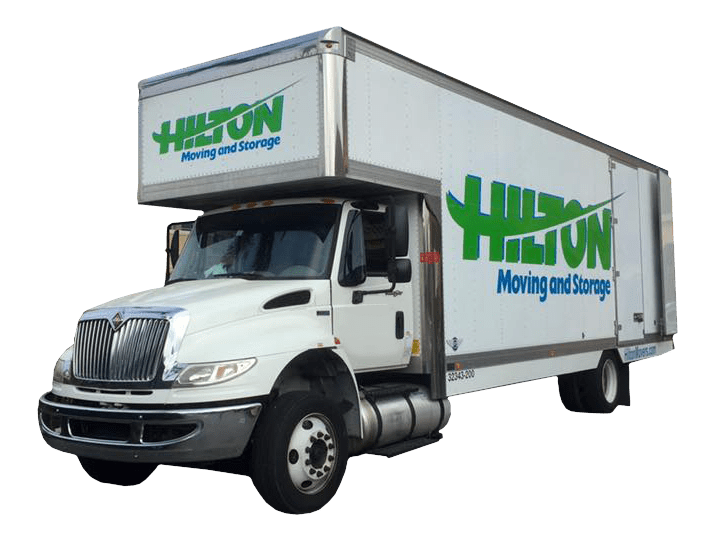
Hilton Moving and Storage has been packing and moving households in Naples, Marco Island, Bonita Springs and Estero since 2010, and we bring the packing materials with us.
If you want the kitchen packed professionally — or you just want someone to look at what you have and tell you what it will take — call (239) 231-7050 or request a free estimate and tell us what you need.