An estate move is rarely just a move. It usually arrives alongside something else — a parent going into assisted living, a house that has to be cleared after a loss, or a family finally deciding that the four-bedroom place in Bonita Springs is more house than anyone needs. The logistics are the straightforward part. The hard part is that almost every box has a decision attached to it.
Here is how estate moves actually work in Southwest Florida: what the stages are, where families tend to get stuck, and what is worth sorting out before the truck shows up.
What makes an estate move different
A standard household move has one household going from one address to another. An estate move usually splits in several directions at once. Some furniture goes to the new residence. Some goes to a family member two states away. Some needs to sit somewhere safe while the family decides. Some is being appraised or sold.
That is why the inventory matters more here than on an ordinary move. Items heading to three different destinations have to be identified and separated before anything is loaded, rather than sorted out on the driveway on moving day.
Moving a parent, or clearing a home after a loss

Downsizing a home someone has lived in for thirty years is slow work, and it does not go faster if the crew rushes it. What helps is starting with the rooms that carry the least weight — the garage, the guest room, the linen closet — and leaving the bedroom, the study and the photographs until last, once everyone has found their rhythm.
Practically, three things make the biggest difference: decide what actually fits in the new place before packing rather than after, keep one box of daily essentials separate so nothing important disappears into storage, and be honest about the timeline. Families who give themselves an extra week rarely regret it.
Hilton Moving and Storage handles senior moving and downsizing across Naples, Bonita Springs and Estero, and our crews are used to working at the pace a family sets rather than the pace a schedule sets.
Where things go when they are not going straight to the new home
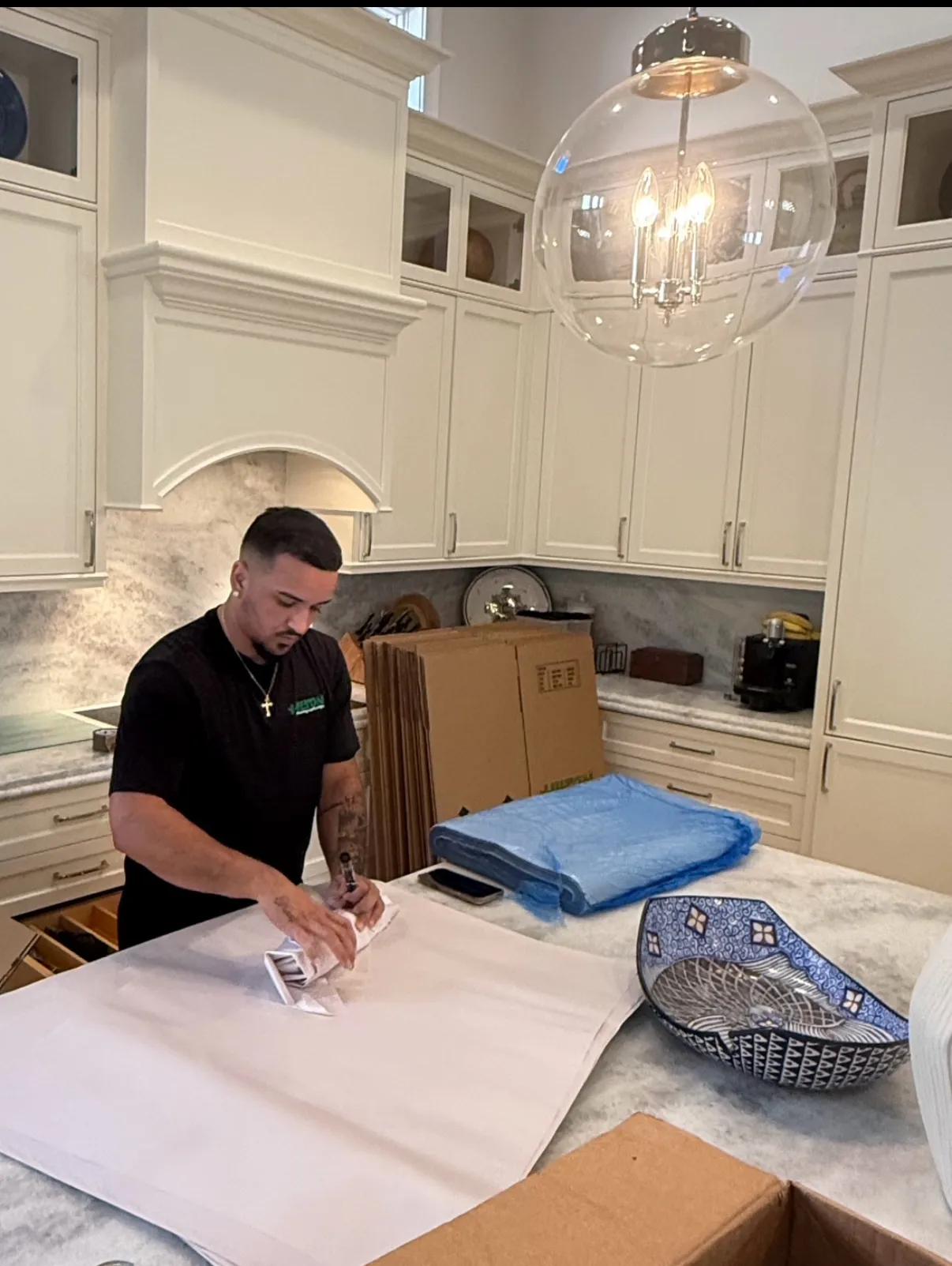
Most estate moves need somewhere to put things for a while. Ours is warehouse storage, not a self-storage facility — belongings are inventoried, wrapped and stored by our staff inside our climate-controlled warehouse. There are no units, keys or gate codes, and no drive-up access. When you are ready for your things, we schedule a delivery and bring them to you.
Climate control matters more here than most people expect. Southwest Florida humidity is hard on wood furniture, upholstery, artwork, photographs and anything with a paper or fabric component. A few months in an uncontrolled space over the summer can cause damage that does not show up until much later.
When part of the move crosses state lines
Estate moves often send furniture to relatives in another state. As an interstate agent for Bekins Van Lines, we can move your belongings anywhere in the country on the same inventory and the same paperwork as the local portion of the job, so nothing gets handed between companies partway through.
The practical benefit is that one team stays accountable for the whole thing. If part of the estate is going to Naples and part is going to Ohio, both halves are tracked the same way.
Handling the pieces you cannot replace
Every estate has a handful of items that are the real reason the family is nervous — the dining table, the piano, the artwork, the china that came over with somebody’s grandmother. Those come out of the general packing plan and get handled individually, with custom crating where it is warranted.
Our white-glove service covers exactly this: individual wrapping and padding, purpose-built crates for fragile or oversized pieces, and placement in the room the item is meant for rather than the nearest open floor. It is the same handling we use for receiving and delivery work throughout the area.
Getting an estimate you can rely on
Ask for a written estimate, and make sure whoever prepares it has actually seen what is being moved. An estimate given over the phone from a room count is a guess, and an estate is exactly the kind of job where a guess goes wrong — the contents of a garage or an attic can quietly double the volume of a house.
Be specific about four things: what is going where, what needs storage and roughly for how long, whether anything needs crating, and whether any of it is crossing state lines. Those four answers are what turn a rough number into a real one.
Questions families ask most
- How far ahead should we start? For a full estate, six to eight weeks is comfortable and four is workable. Under two weeks is possible, but you lose the ability to sort carefully, which is usually the part that matters most.
- Can you move part of the house now and the rest later? Yes. Splitting a move across two dates, with the remainder in storage in between, is common on estate jobs.
- What happens to the things nobody wants? We move and store belongings; we do not sell or dispose of estate contents. Families usually handle that through an estate sale company or auction house, and we work around whatever schedule that sets.
- Does someone have to be there on moving day? Someone should be present or at least reachable, because questions come up that only the family can answer. It does not have to be the same person all day.
If you are working through an estate move in Bonita Springs, Naples or Estero and want a straight answer about what it involves, get in touch and we will walk you through it.